DTF St. Louis, Episode 6 | The Psychology of Relational Decay

What if nothing in this story is about betrayal in the moment, but the futility of the return to normalcy?
“So DTF, it's a site that says hook up, there's no consequences. Be married, meet another married person, go back home and go back to your normal life. That is promising for suspense also because what are the chances that that's going to go well? There are unforeseen complications. As much as excitement is the promise, there's no such thing as sharing of intimacy with someone and not carrying some alteration of you after that. Like the things change in small amounts or greater but you won't be the same person.”
- Steve Conrad
Lust for Darkness & DTF St. Louis

When I heard this interview, it reminded me of a dark game called Lust for Darkness. In it, your wife has been missing for a year, and a mysterious letter leads you to a mansion controlled by a secretive occult that worships a dark god called Lusst’ghaa. You discover she was kidnapped and subjected to psychological and ritualistic abuse, losing her unborn child, and that the ordeal has left her physically and psychologically altered. When you bring her home, it’s clear the horrors she endured left a lasting mark, and she yearns for the dark experiences that changed her.
While the circumstances between Lust for Darkness and DTF vastly differ, they share a striking similarity. Intimate experiences, whether traumatic or deeply unsatisfying, leave lasting marks on a relationship. Trauma and disappointment have a powerful impact, and often permanently shape of relationships by what it's endured. The path to recovery requires all hands on deck and active participation to succeed.
Since Carol has been intimate with Clark, her sexual interest in Floyd appears nonexistent. Whether it started before or after the Chicago incident, her affair with Clark may have been the carte blanche to their marriage. This scene is painful to watch. As Carol is trying to be intimate with Floyd, she hits her limit, sounding distressed and unable to continue. I can sympathize with feeling overwhelmed, disengaged and actively communicating that sentiment.

Where this becomes concerning is when she says “I thought I could again, but I don’t think I can anymore.” Leaving open for interpretation, whether she was referring to their intimacy in that moment, the future, or their marriage as a whole. Regardless, feeling love and care for your partner, no matter the circumstances, at least would warrant a conversation. Carol says this isn’t working, and that she wants to squirm from under him. She sounds disgusted with what and who he is, and makes sure he feels the way she sees him.
Clark watches from the closet in awe as this transpires. Astounded at how Carol treated her husband, his friend. Throughout the episode you notice a change in Clark. It was established early on that Floyd would be on all his emergency assignments. However we later see he’s actively trying to get Floyd more work, like a school presentation. It’s not a necessity, but he’s trying to get more work for Floyd since he gets paid part time. Whether it’s pity, or genuinely motivated, it doesn’t address the core issue at hand. Resulting in worsening Floyds self esteem.
While I would love to get into how much I enjoyed the Denny’s scene, I need to get into one more observation I have that involves Jungian psychology, and Maslow’s Hierarchy of Needs.
Jungian Psychology
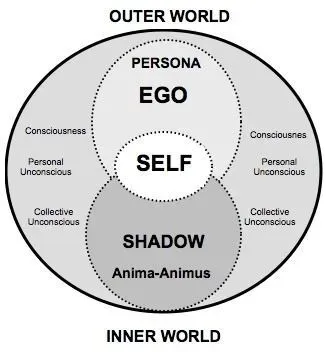
If you aren’t aware of what this is, I’ll give a rough explanation. You’re a house, the persona is the front you present, the ego is the occupant. The shadow is the basement filled with what you hide and ignore. In that basement is a chest containing a deeper unfamiliar part of yourself. The self is every nook, cranny and hutch of the house as a whole.
For the time being, we will be looking at the “homes” of Clark, Carol and Floyd.
Clarks ego is his control and presentation of social legitimacy as a weatherman. His basement holds his desire to relinquish control and experience a type of powerlessness. In his chest you may find his underdeveloped emotional depth and vulnerability. His relationship with Floyd and his admiration reflects an unconscious recognition of the authenticity he lacks. His behavior shows a continued effort to present himself as controlled, however the experience he’s had with Floyd has shown him how beautiful it is to show vulnerability. He wants to be seen in a similar way, but has a persona that may be in conflict.
Carols ego actively compensates for the basement clutter and its influence. Constantly trying to feign control over what lies beneath. Her basement holds her emotional and financial insecurities, and feelings of rejection. In her chest you may find a directive for control, authority and suppression of vulnerability. Floyd is partially responsible for the basement clutter, being honest led to her breakdown, and she is trying to reclaim control of her home with this directive voice taking the wheel. Her relationship with Clark validates this voice and gives power to where it shifts from internal to external.
Floyds ego is oriented toward relational connection but is shaped by attachment dynamics. A compulsion toward maintaining emotional bonds and love may be complicated by underdeveloped skills in setting boundaries. His basement holds abandonment issues, low self-worth, resentment and self sacrificial tendencies. In his chest you may find his longing for attachment, need for validation, and sensitivity. With Clark, he experiences attachment, but doesn’t have intimacy. In his relationship with Carol, he feels abandoned and worthless. Desperate to do anything to earn her love again.
Assuming the affair was a joint decision, Floyd agreed to open their marriage in an effort to repair it. Carol gets to experience recess with a new friend of his for the summer. Hoping this sacrifice of his self esteem will be enough for him to earn her love back. The last time we heard he felt loved by Carol was the day of his interview in Chicago.
None of what I’m about to say is intended to be sexual in nature. To set the standard; Admiration is an observation, wanting is a proximity, love is unconditional. Carol admires and wants Clark for what she reaps from him emotionally and financially. She admires Floyd but does not want him. Her love for him is purely conditional. Clark wants and admires Carol out of convenience based on his decision to cheat. He holds no love for her. He admires, wants and loves Floyd for how he see’s him. Altruistic, selfless, and sensitive. Floyd wants and loves Carol in hopes of reciprocation. He appears to love, admire and want Clark for the reciprocity he doesn’t get from Carol.
All building the love triangle we have now.
Maslow’s Hierarchy of Needs
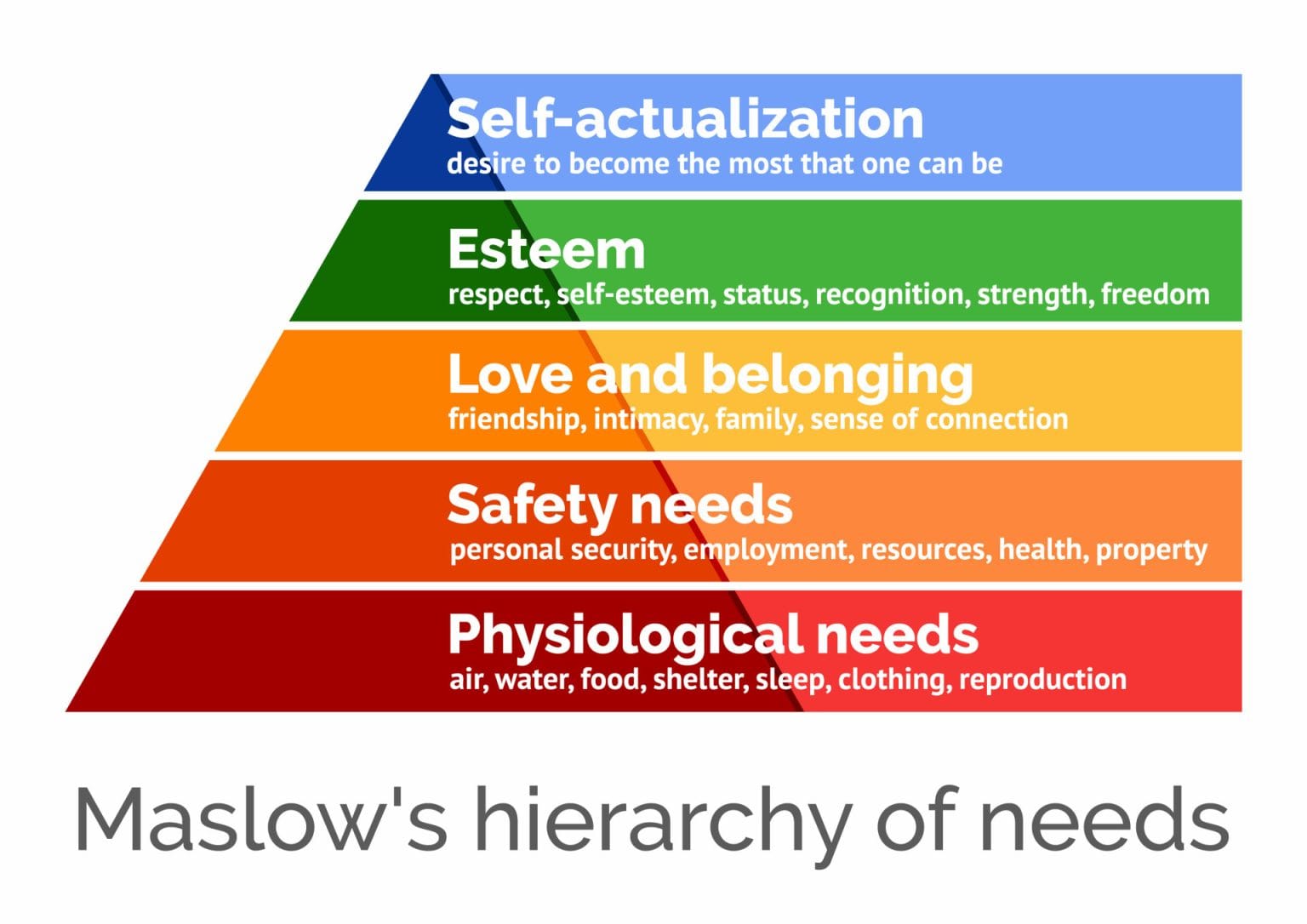
Maslow's Hierarchy of Needs is a theory in psychology that describes human motivation as a progression through five levels of needs visualized as a pyramid. At the base are physiological needs like food, water, and sleep, followed by safety needs such as security and stability; once these are met, love and belonging is sought through relationships and social connection, then esteem needs like respect, confidence, and achievement. At the top is self-actualization, where individuals strive to reach their full potential, pursue personal growth, and find meaning, with the idea that higher-level needs become important only after lower-level ones are satisfied.
Why mention this?
Because while a fraction of these needs are being met, even more are being neglected. Let’s apply this to our characters.
Regarding Clark, his physiological needs are being met. He has a home, eats well, and has sex regularly with Carol. Regarding safety, he has steady income, and works out regularly with minimal deviation. Love and belonging is intact because of his rooted role within his social circle. His self esteem and needs are met, and his self actualization appears to be wavering since the Beware moment on TV from the opening. It’s possible that it’s been healing since he met Floyd.
Carols physiological needs are shaky at best. She has a home, eats well and has sex regularly. She may be losing sleep because of the fear of losing her home. That involves her feeling of safety and security. Due to the financial strain she experiences regularly, this level is greatly compromised and affects her emotional security as a result. Her feelings of love, belonging and self esteem hit its lowest when Floyd chose to be honest with her, however now she finds herself desired by two men. She appears to feel confident, though her respect for others is lacking. Her self actualization in purpose looks to be taking care of her son.
Floyds physiological needs are not doing well. He’s gained weight, sleeps poorly, doesn’t exercise of his own accord and has not had sex in ten months. His safety and security have suffered consistently. His role in his family is uncertain, his financial stability is almost nonexistent, and he was recently rejected by his wife for intimacy. Tearing down his love and belonging, and salvaged partially by his sessions with Richard, and his friendship with Clark. His self esteem has been low because of his weight, and Carols rejection of him realized his fears of being unattractive. His self actualization, creativity and purpose has earned him disdain from Carol since the Chicago incident. If he cannot feel proud of what he feels called to do, what is left but to associate his fulfillment of his passion with palpable disappointment from Carol when love is all he wants from her?
This shows Clarks needs as predominantly stable with the exception of self actualization. Carols needs are compromised but she is focused on healing at the expense of others. Floyds needs are not being met. He is in great distress and is mending, but cannot out-pace how fast he’s losing everything.
With the next episode likely being a full convergence of these factors, the events leading to the dissolution of these relationships are likely going to be devastating. I think those watching who were focused on solving who’s responsible for Floyds death will be disappointed to find that it’s not one person. It’s everyone. Floyd because of his self sacrificial tendencies and desperation for love from Carol. Clark because of his attempts to fix what he thought he broke. Finally, Carol for neglect of Floyds needs in favor of self preservation, reluctance to show vulnerability, and lack of interest in working on her marriage.
Final Thoughts
This was a challenging episode for me to process because of traumas I’ve endured in relationships. It’s difficult to see this many people in pain and identify with each of them. What we’re watching doesn’t strike me as popcorn media to complete before moving onto the next, or a case to solve in hopes of being “right”. In life and on screen, everyone is fundamentally flawed. I have biases, however I try to sit with those flaws and emotions to exercise empathy.
Having a family to care for can bring out our darkest selves when there is a lingering threat. I have praise and disappointment for each of them. I have praise for Clark for exercising his vulnerability and openness to Floyd. I have praise for Floyd for his altruism. I have praise for Carol for her resilience. But that doesn’t stop me from feeling disappointed in Clark for cheating, Floyd for neglecting his responsibilities to his family, and Carol for exercising a twisted sense of control that should never exist, but does. The pursuit of stability by means of exploit and manipulation at the expense of other’s wellbeing is inherently ugly. They are all broken people, how they go about healing is what determines the content of their character.
Hope you’re all double great. I’ll see you in the afternoon spray.
Member discussion